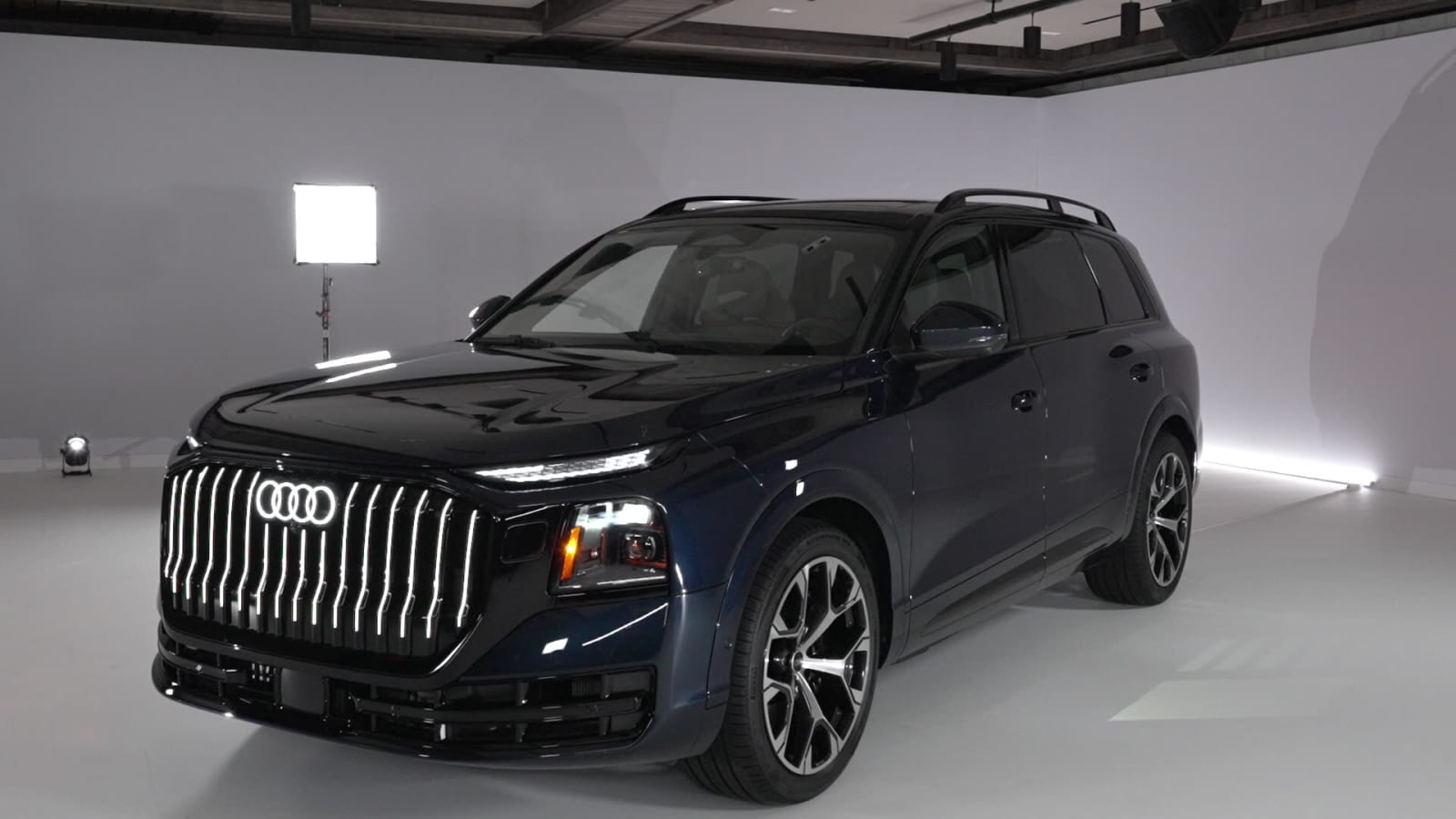
The Heavy-Metal Pivot: Audi Retreats to the Grandeur of the Three-Row Q9
For years, Audi’s interlocking rings symbolized a sleek, technocratic optimism—a quiet luxury tailored for those who found BMW too ostentatious and Mercedes-Benz too ornate. But of late, the German automaker’s American engine has sputtered, caught in the doldrums of a stalling electric vehicle transition and the tightening grip of global tariff anxieties. As the initial fever for battery-powered fleets cools into pragmatic consumer hesitation, Audi has watched its U.S. sales numbers soften over consecutive quarters. The glossy vision of an all-electric tomorrow has collided with the stubborn, gravel-strewn reality of today: an American buyer base still deeply in love with scale, status, and the unfettered freedom of internal combustion.
In the high-stakes theater of automotive survival, the corporate antidote to a crisis of identity is almost always a vehicle of monumental proportions. Enter the Audi Q9. By greenlighting this cavernous, three-row flagship SUV specifically targeted at the American market, Ingolstadt is mounting a tactical retreat to higher, more lucrative ground. The Q9 represents far more than just another silhouette on the assembly line; it is a concession to market reality. In a landscape where the affluent demand rolling sanctuaries capable of shuttling prep-school cohorts and weekend cargo in whisper-quiet opulence, a three-row behemoth is the closest thing to guaranteed liquidity a luxury brand can buy.
> "In a landscape where the affluent demand rolling sanctuaries, a three-row behemoth is the closest thing to guaranteed liquidity a luxury brand can buy."
This is a turf war fought in the drop-off lanes of elite private academies and the valet stands of coastal country clubs, where rivals like the BMW X7 and the Mercedes-Benz GLS have long enjoyed uncontested dominance. By scaling its engineering upward to accommodate a genuine third row, Audi is attempting to reclaim the cultural real estate it yielded during its premature sprint toward electrification. It is a shrewd, if slightly clinical, acknowledgment that while the future may eventually belong to the quiet hum of volts, the present—and the high-margin revenue required to fund that future—belongs to the grand, imposing luxury cruiser. Whether this heavy-metal offensive can outrun the headwinds of shifting trade policies remains to be seen, but for now, Audi is placing its heaviest bet on the enduring American dogma that size is the ultimate luxury.