The Heraldry of the Horizon
In the clinical, hum-infused sanctum of the Rocco A. Petrone Launch Control Center, where the future of human spaceflight is calculated in cold bytes and flickering telemetry, there exists a quietly stubborn monument to the human touch. On a humid Thursday morning, August 6, 2026, as engineers and flight controllers hunched over consoles for a grueling terminal countdown simulation of the Artemis III mission, a single, weathered jacket draped over the back of an office chair captured the quiet gravity of the endeavor. It was a palimpsest of modern exploration, its nylon fabric heavy with the embroidered weight of Artemis I and II patches—colorful, stitched totems of past orbits and uncrewed loops around the moon. Beside them, legacy NASA insignia clung to the material like medals on a campaign veteran, linking the mid-century audacity of Apollo to the systematic, digital grind of the current lunar return.
```
"These patches are small, vibrant geometries of hope, signaling that while the machines may be guided by silicon, the journey remains entirely hand-made."
```
The simulation itself was a rehearsal for history, a high-fidelity mimicry of the day humanity finally returns its boots to the lunar regolith. Artemis III represents not just a sequel to the voyages of the 1970s, but a profound paradigm shift—a transition from the orbital proofs-of-concept of its immediate predecessors to the gritty, dusty reality of deep-space survival and permanent infrastructure. Inside the control room, the atmosphere during these terminal counts is notoriously thick, a tense choreography of simulated anomalies, communication dropouts, and split-second decisions where the margin for error is razor-thin. Yet, the draped jacket offered a rare moment of stillness amid the high-frequency anxiety, a poignant reminder that behind the monolithic infrastructure of NASA’s Exploration Ground Systems lies a deeply human, almost romantic desire to brand the void with needle and thread.
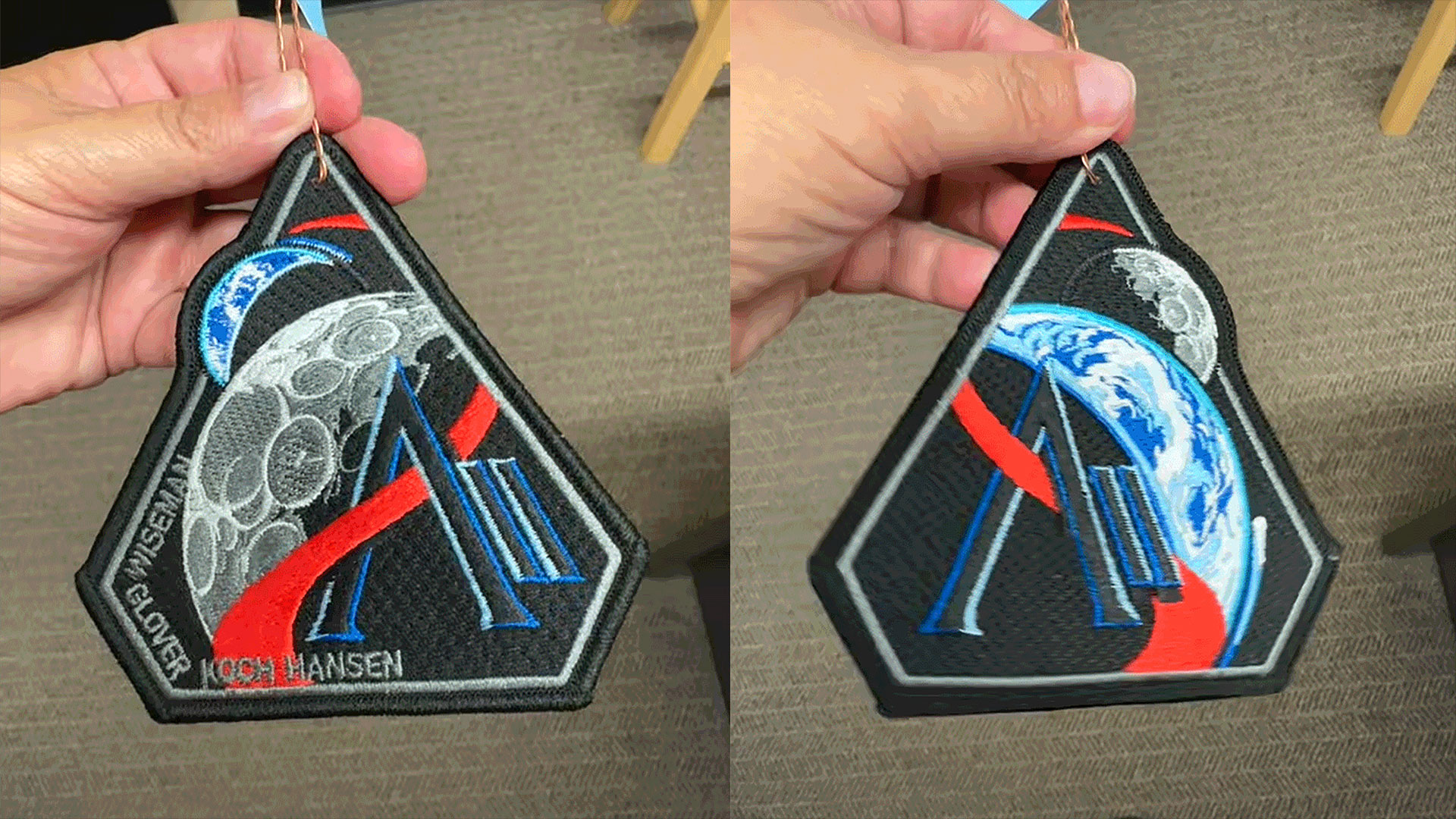
Ultimately, mission patches have always served as the heraldry of the secular space age, transforming cold government procurement into a shared, mythic narrative. To wear them is to carry a physical archive of collective risk; to leave them draped over a chair during a simulation is a silent act of faith in the machinery and the minds operating it. As the simulation clocks ticked down toward an imaginary T-zero, the embroidered arcs of the Artemis patches—evoking planetary horizons and the trajectory of the Orion spacecraft—seemed to catch the sterile fluorescent light. They serve as a reminder that spaceflight is never merely a triumph of engineering; it is a culture of shared memory, carried forward by those who still believe in the poetry of the frontier.