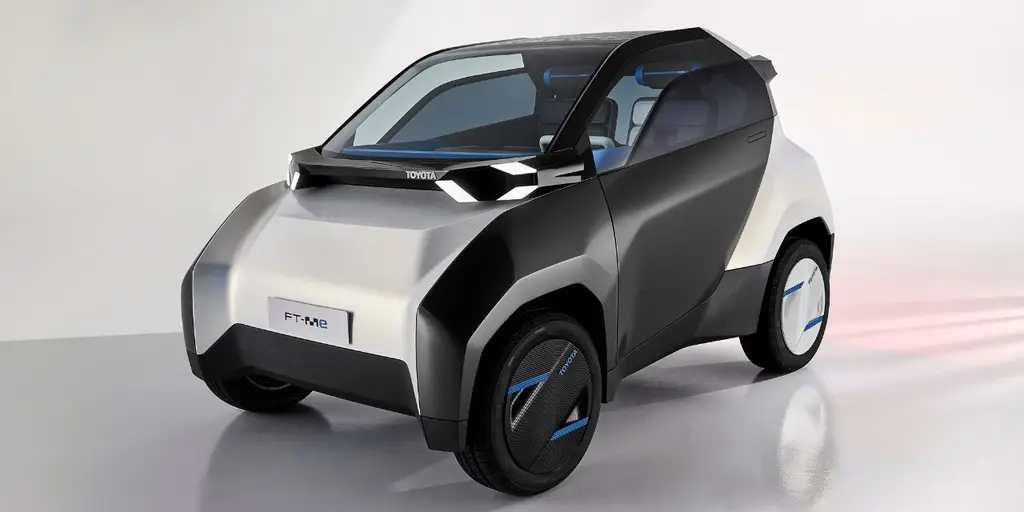
The Miniature Revolution: Can Tiny Electric 'Cars' Conquer the American Colossus?
The Shrinking Scale of Liberty
For nearly a century, the American highway has served as a theater of manifest destiny, populated by roaring V8 engines and ever-expanding steel fortresses designed to conquer the continental horizon. Today, however, a quieter, decidedly more diminutive revolution is humming along the margins of our asphalt landscape. Enter the Low-Speed Vehicle (LSV)—an embryonic category of transit that sits awkwardly but intriguingly in the liminal space between the country-club golf cart and the highway-ready electric sedan. To a populace conditioned to equate automotive scale with personal sovereignty, these pint-sized electric runabouts present an almost comical proposition. Yet, as urban density thickens, ecological anxieties mount, and the logistical nightmare of metropolitan parking worsens, a vanguard of ambitious manufacturers is betting that Americans are finally ready to trade their armored road-cruisers for something closer to a motorized roller skate.
The Middle-Ground Machine
Technically defined by federal safety standards as four-wheeled motor vehicles that max out at 25 miles per hour, LSVs represent a regulatory masterstroke tailored for the modern micro-commute. They are legally permitted on public roads with speed limits up to 35 miles per hour, carving out a vital niche in suburban enclaves, retirement communities, and congested city centers. By bypassing the labyrinth of costly, weight-adding crash-testing mandates required of full-sized passenger cars, manufacturers can produce these vehicles at a fraction of the cost. Yet, unlike primitive golf carts, LSVs are equipped with essential safety features—shatterproof windshields, three-point seatbelts, headlights, turn signals, and rearview mirrors—that elevate them into the realm of legitimate transport. This regulatory sweet spot has ignited a gold rush among startups and legacy cart-makers alike, all vying to capture the "last-mile" transit market that traditional automakers have long ignored.
> "To squeeze oneself into a plastic-paneled, whisper-quiet pod requires a capitulation to utility over vanity—a trade-off that is increasingly easy to make when parking is a premium and gasoline is a luxury."
The Ego and the Asphalt
To succeed, however, these micro-mobiles must overcome a formidable psychological barrier: the deeply ingrained American automotive ego. In a culture where the light-duty truck has reigned supreme as a symbol of rugged self-reliance, driving an LSV is an act of conspicuous moderation. It is an admission that most daily trips do not require a three-ton towing capacity, but merely a trunk large enough for a bag of groceries. Proponents of the shift argue that the appeal of the tiny car lies precisely in this rejection of excess. In master-planned communities from Florida to California, these vehicles are already transitioning from quirky novelties to household staples, serving as the primary vehicle for local errands. Whether these miniature machines can successfully breach the fortress of the suburban cul-de-sac and colonize the wider American grid remains an open question, but their very existence suggests that the future of transportation may not be larger, faster, or louder—but delightfully, efficiently small.