The Ghost in the Lizard: A Cosmic Collision of Timelines over Lacerta
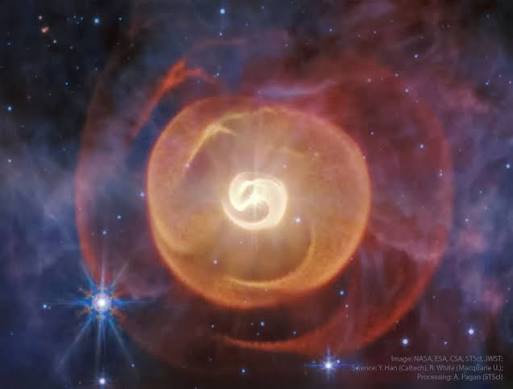
There is a quiet, almost devotional patience required of modern astrophotography—a discipline that demands we stare into the cold, slow-burning abyss of deep space and wait for the ancient light of distant stars to accumulate on a sensor. But the universe, for all its reputation of icy indifference, possesses a penchant for dramatic irony. Such was the case in the NASA Astronomy Picture of the Day captured in August 2026, which reveals an exquisite cosmic collision of timelines: the ancient, sprawling dust-lanes of the Lacerta Nebula momentarily interrupted by the violent, incandescent death of a rogue meteor. What was intended to be a portrait of stellar serenity—the soft, gas-blown folds of a nebula nestled in the northern constellation of the Lizard—became instead the stage for a spectacular, unscripted suicide of space debris.
To appreciate the scale of this celestial photobomb is to understand a profound optical illusion of deep-space photography. The Lacerta Nebula lies thousands of light-years from Earth, an immense nursery of gas and dust evolving on a scale of millions of years. The meteor, by contrast, was a mere speck of interplanetary grit, likely no larger than a pebble, meeting its terminal velocity mere miles above our heads in the whisper-thin upper atmosphere. As it struck Earth's atmospheric shield at hypersonic speeds, the friction compressed the air before it, generating temperatures hot enough to instantly vaporize the rock. This sudden sublimation released a brilliant, emerald-tinged streak—the chemical signature of ionizing elements like nickel and iron—slashing across the delicate cosmic tapestry like a neon brushstroke on a Renaissance canvas.
> "The meteor’s path, terminating in a bright, terminal flare before vanishing into microscopic ash, inserts a chaotic, highly localized violence into a scene of supreme cosmic indifference."
There is a distinct human comedy in this juxtaposition. Astrophotographers spend hours, sometimes days, aligning mounts and stacking exposures to filter out the noise of our terrestrial existence, seeking a pure, unblemished communion with the eternal. Yet, the universe remains stubbornly kinetic. The meteor’s path, terminating in a bright, terminal flare before vanishing into microscopic ash, disrupts this pursuit of sterile perfection. It is a reminder that the void is not empty, but rather a crowded, rushing highway where the debris of creation is constantly colliding with our fragile envelope of air.
Ultimately, the image transcends its status as a mere scientific curiosity to become a modern memento mori. In the brief, brilliant flash of the vaporizing meteor against the timeless, glowing gas of Lacerta, we find a visual metaphor for our own existence: a brief, luminous streak of heat and light, burning fiercely against a vast and silent background of infinite depth. It suggests that perhaps the most captivating things in the cosmos are not those that endure forever, but those that have the audacity to burn out in a single, spectacular instant.