The Sublime Collision: When Celestial Fire Meets Icelandic Ice
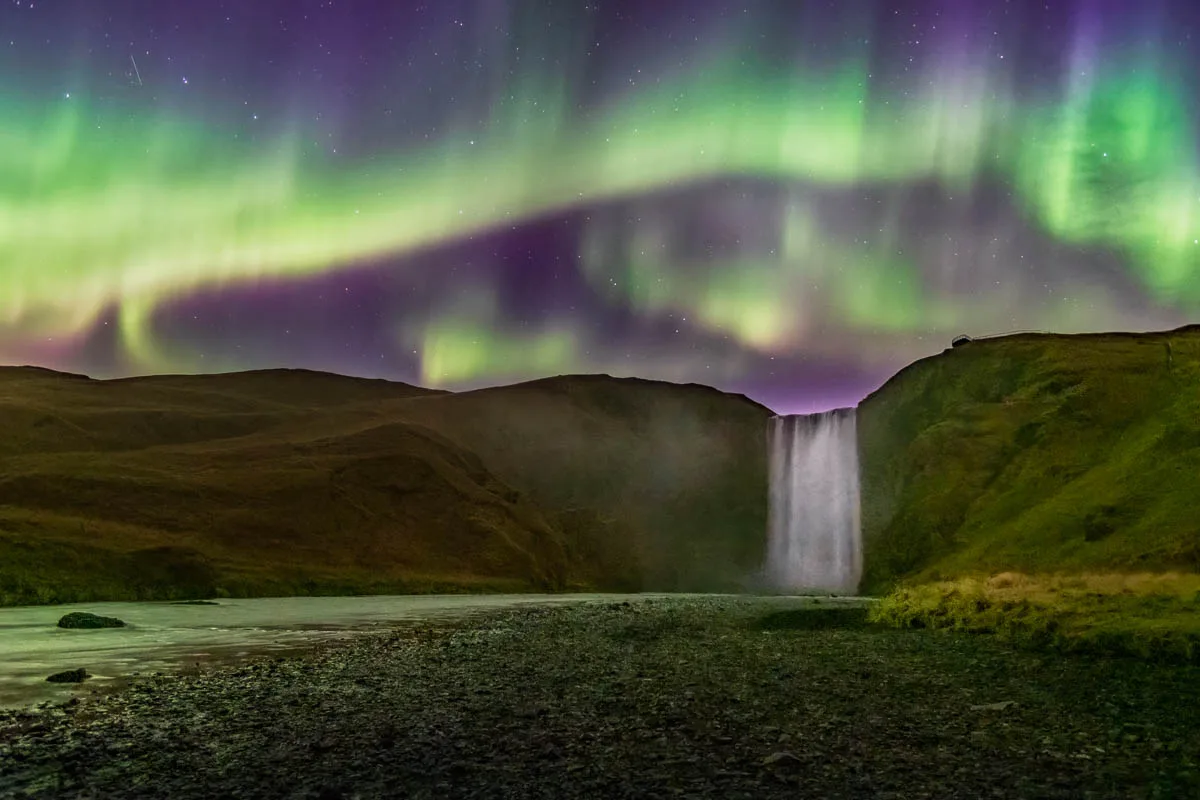
In the high-latitude theater of the North Atlantic, the Earth seems to perform its most intimate rehearsals of creation and decay. Iceland, a basaltic scrap of fire and ice, has long served as the ultimate canvas for this elemental drama. Yet, when the terrestrial rush of a glacial waterfall meets the silent, atmospheric incineration of the solar wind, the result transcends mere geography; it becomes a monument to the sublime. NASA’s Astronomy Picture of the Day captures this exact synthesis—a breathtaking tableau where a vivid aurora borealis drapes like a neon curtain over a roaring Icelandic cascade. The image is not merely a triumph of modern astrophotography, but a stark, gorgeous reminder of our planet's exquisite positioning within a violent and beautiful cosmos.
```
"To witness the aurora is to watch the sun’s breath brushing against the Earth’s magnetic shield, a silent dialogue between star and planet."
```
To understand the mechanics of this visual poetry is to appreciate a grand cosmic choreography. This celestial light show begins ninety-three million miles away, where solar storms eject streams of charged particles into the void. When these solar winds collide with the Earth's magnetosphere, they are funneled toward the poles, striking atmospheric gases to release photons of brilliant light. Oxygen yields the familiar, ghostly greens and rare, high-altitude reds, while nitrogen bleeds into deep purples and electric blues. In this featured photograph, these colors do not merely hover; they paint the night sky in violent, chromatic brushstrokes that mirror the churning velocity of the water below. The waterfall, a relic of melting glaciers and ancient volcanic pathways, acts as a physical anchor to a light show that is entirely ethereal—an intersection of the permanent and the fleeting.
In an era increasingly defined by the sterile glow of handheld screens and the claustrophobia of urban hyper-connectivity, such images offer a vital, existential decompression. The Astronomy Picture of the Day has long functioned as a quiet, digital sanctuary for the modern observer—a daily proof that there is a vast, unmapped wilderness operating just beyond the periphery of our daily anxieties. By framing the cosmos through the lens of familiar terrestrial landmarks, the photograph bridges the gap between the incomprehensible scale of the universe and the intimate reality of human experience. We look at the dark, cold plunge of the Icelandic waters and feel the chill; we look at the sky and sense the infinite. It is this dual recognition of our own fragility and our profound capacity for wonder that elevates a simple astronomical event into a transcendent work of art.