The Liturgy of the Falling Sky: NASA’s ‘Mostly Perseids’ and the Art of Cosmic Witness
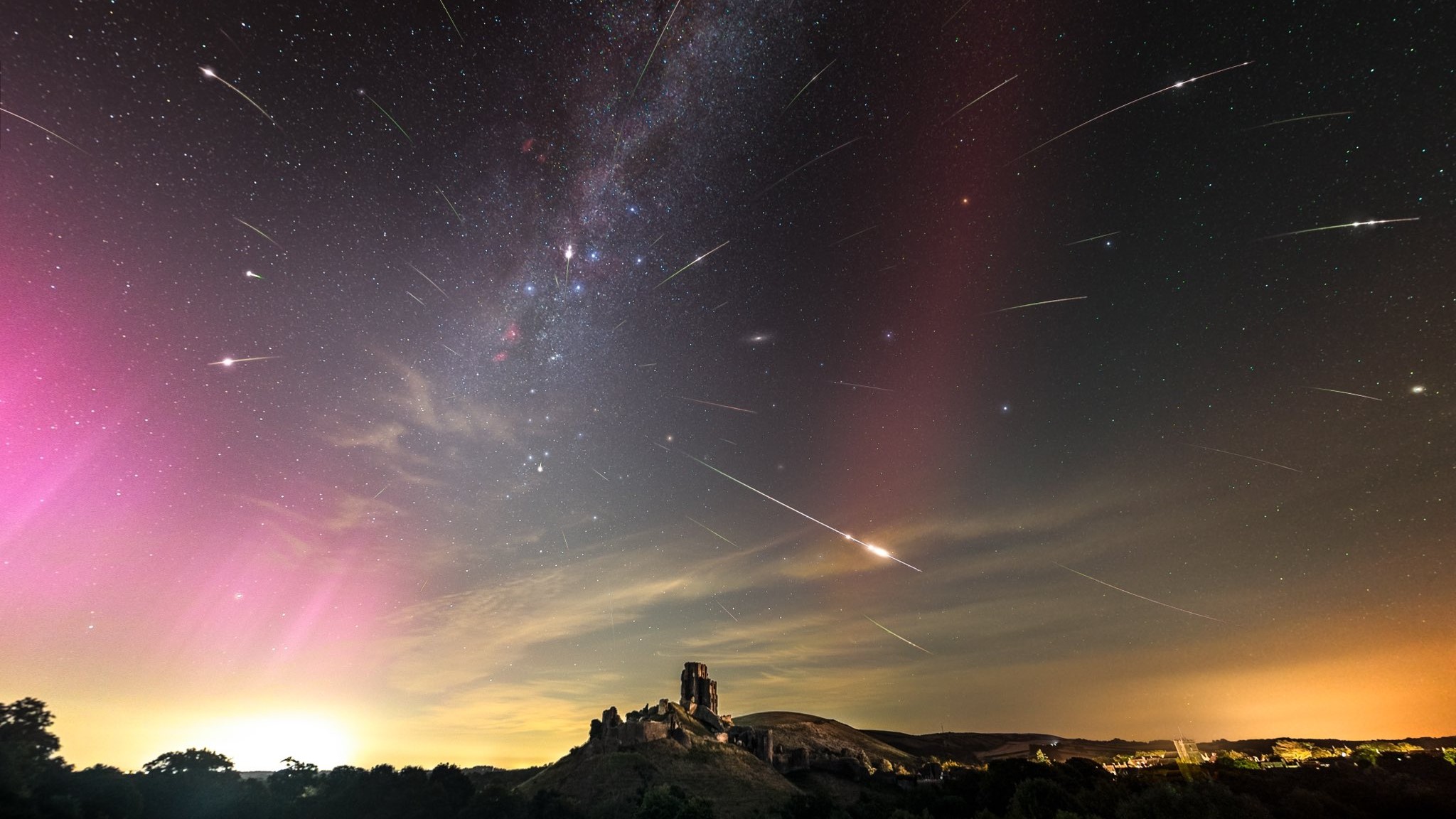
The mid-August sky has long served as humanity’s premier theater of ritualized anticipation. Every year, as Earth sweeps through the orbital debris trail of Comet Swift-Tuttle, our upper atmosphere ignites with the silent, incandescent choreography of the Perseid meteor shower. On August 22, 2026, NASA’s Astronomy Picture of the Day (APOD) captured this ephemeral seasonal phenomenon not merely as a scientific occurrence, but as a work of profound visual poetry. Titled "Mostly Perseids," the featured video compilation transforms a chaotic celestial event into a permanent digital monument. It is a striking testament to the fleeting—where ancient grains of cometary dust, some no larger than a pebble, vaporize at sixty kilometers per second, leaving behind luminous scars that burn briefly against the dark canvas of the cosmos.
```
"The universe is indifferent to our presence, yet we remain uniquely equipped to marvel at its passing, finding a quiet solace in the burning of cosmic dust."
```
The brilliance of the "Mostly Perseids" presentation lies in its meticulous technological synthesis—a masterclass in patience and modern astrophotography. The "mostly" of its title is a wry, honest nod to the contemporary night sky, a crowded proscenium where primeval cosmic relics must share the frame with the blinking, low-Earth-orbit machinery of human ambition. Yet, beneath the passing glint of satellites, the true protagonists of the sequence endure. Utilizing time-lapse techniques to compress hours of darkness into seconds of liquid motion, the video reveals the meteors radiating outward from the northern constellation of Perseus like sparks thrown from a celestial forge. To construct such a narrative requires an act of devotion; the photographer must align countless frames, accounting for the rotation of the Earth, to translate the random lottery of meteor strikes into a coherent, layered tapestry of light.
Ultimately, NASA’s daily curation of the cosmos functions as a form of secular liturgy for an anxious, hyper-connected age. In a media landscape dominated by immediate, terrestrial noise, APOD offers a daily invitation to lift our collective gaze. The Perseids are a reminder of our planet's perpetual voyage through a haunted cosmic neighborhood; Swift-Tuttle’s icy debris is a relic of our solar system's youth, meaning we are quite literally colliding with our own history. By rendering these violent, high-speed atmospheric deaths as delicate strokes of neon-hued brushwork, "Mostly Perseids" captures the sublime tension at the heart of modern astronomy. It humbles the viewer while celebrating the human agency required to capture such fleeting beauty, proving that even in the vast cold of space, the desire to witness and record remains our most warming impulse.