The Gravity of Intimacy: Deciphering the Slow-Motion Mergers of NASA’s Cosmic Portraiture
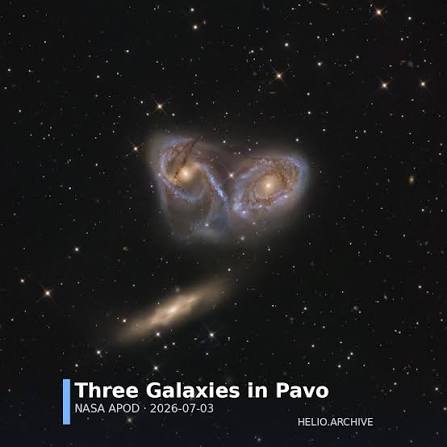
To look upon the deep cosmos is to examine a gallery of exquisite, slow-motion collisions, where history is written not in human years but in epochs of light. On August 10, 2026, NASA’s Astronomy Picture of the Day offered a startlingly intimate glimpse into this celestial theatre, presenting a visualization of three distinct galaxy pairs caught in various stages of gravitational seduction. What appears to the earthbound observer as static, serene smears of light is, in truth, an exhibition of existential drama on an unimaginable scale. These stellar islands are not merely passing in the night; they are performing a heavy, inescapable waltz, bound by the invisible threads of gravity that drag them toward an inevitable, unified future. It is a stark reminder that in the grand architecture of the universe, isolation is a temporary state, and contact is a transformative, albeit violent, art form.
The visual data reveals the intricate, devastating anatomy of these mergers, capturing the precise moments when the structural integrity of individual galaxies begins to dissolve. Under the relentless pull of mutual attraction, once-orderly spiral arms are stretched into gossamer tidal tails—long, luminous bridges of gas and stars flung out into the void like desperate limbs. In one pair, the subtle distortion of a galactic disc speaks to a preliminary, tantalizing brush; in another, the core of a smaller companion is already being systematically cannibalized by its larger partner, its stellar population dispersed into a chaotic, brilliant halo. Yet, these interactions are far from purely destructive. The immense tidal forces compress vast clouds of interstellar gas, igniting frantic, brilliant bursts of new star formation. It is a paradox of cosmic proportions: the death of individual galactic identities serves as the very womb for a new generation of suns.
> "We are looking at a process of cosmic alchemy, where the destruction of ancient structures is the prerequisite for the birth of new worlds."
There is a profound, quiet irony in our consumption of these images. We watch these monumental cataclysms—events that unfold over hundreds of millions of years and release energies capable of reshaping the cosmos—with a sense of serene, aesthetic detachment from our quiet corner of the Milky Way. By curating these cosmic phenomena, NASA does more than catalog astronomical data; it bridges the gap between the unfathomable, mathematical physics of the deep universe and the human craving for narrative meaning. In the silent, agonizingly slow struggle of these three galaxy pairs, we find a mirror for our own existential conditions: the terrifying beauty of change, the irresistible pull of connection, and the knowledge that out of ruin, something entirely new is invariably born. We are left looking at the screen not just as spectators of a distant sky, but as witnesses to the slow, beautiful melting of the universe into itself.