The Skyward Armaments: American Airlines and the High-Altitude Race for Prestige
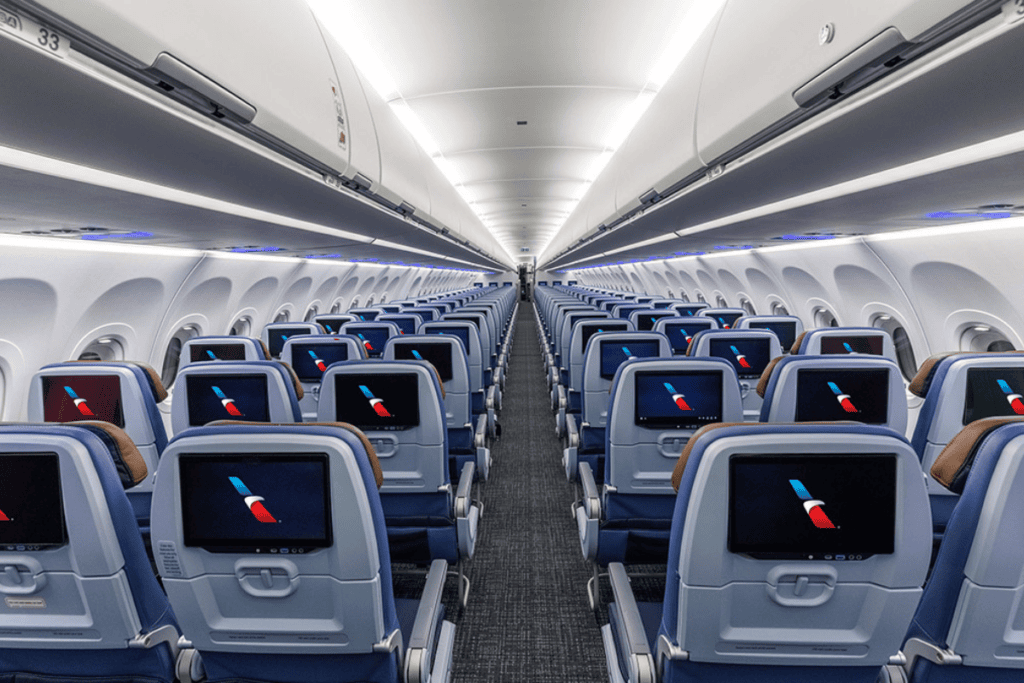
For nearly a decade, the reigning philosophy among the accountants of domestic aviation was a quiet, calculated austerity. In an era dominated by the democratization of the skies, carriers wagered that passengers, anesthetized by cheap fares, would tolerate a stripped-back, utilitarian cabin experience. American Airlines bet heavily on this clinical minimalism, aggressively stripping seatback screens from its narrow-body fleet under the assumption that travelers preferred the familiar glow of their own iPads to the proprietary hardware of an airliner. It was a strategy of elegant cost-cutting that mistook convenience for luxury. But humans, as it turns out, do not merely wish to be transported; they wish to be pacified, pampered, and insulated from the friction of modern travel.
This existential miscalculation has left the Fort Worth-based carrier playing a frantic, multi-million-dollar game of catch-up. While American streamlined its cabins into monochromatic efficiency, its chief rivals, Delta Air Lines and United Airlines, pivoted toward a gilded "premiumization" of the skies. Delta, in particular, cultivated an aura of curated, high-design hospitality—treating the cabin not as a bus with wings, but as an aspirational lifestyle brand complete with free high-speed Wi-Fi and sprawling entertainment ecosystems. United soon followed with its ambitious "United Next" campaign, retrofitting hundreds of aircraft with larger overhead bins and seatback screens. Marooned in a middle-market purgatory, American found its high-yield business travelers drifting toward competitors who understood that in the modern zeitgeist, the journey is not merely a prelude to the destination, but a status symbol in its own right.
```
"The modern traveler does not merely wish to be transported; they wish to be pacified, pampered, and insulated from the friction of modern travel."
```
American’s newly announced course correction is both an expensive confession of strategic error and a dazzling bid for redemption. The carrier has pledged to aggressively expand its premium seating footprint, redesigning its narrow-body cabins to feature larger, more opulent first-class sections, alongside the highly anticipated return of seatback screens on select fleets. This retrofitting campaign represents a profound philosophical shift: a realization that the high-margin, premium passenger is the ultimate arbiter of airline profitability. By offering more physical space and the comforting, domestic anchor of a dedicated screen, American is attempting to recapture the romance of mid-century aviation, translated through the sleek, hyper-connected language of the twenty-first century.
Yet, buying back the goodwill of a discerning public is a complex logistical theater. Installing heavier seats, sophisticated wiring harnesses, and state-of-the-art inflight entertainment systems adds weight and burns fuel—a delicate calculus in an industry haunted by fluctuating energy costs and carbon-neutral targets. Nevertheless, in the hyper-competitive corridor of transcontinental travel, the alternative is irrelevance. American’s gamble is a fascinating testament to the enduring power of prestige; it proves that even in an age of automated check-ins and algorithmic pricing, the ultimate battleground remains the intimate, physical space of the passenger cabin, where the promise of a little more room and a glowing screen can still command a premium.