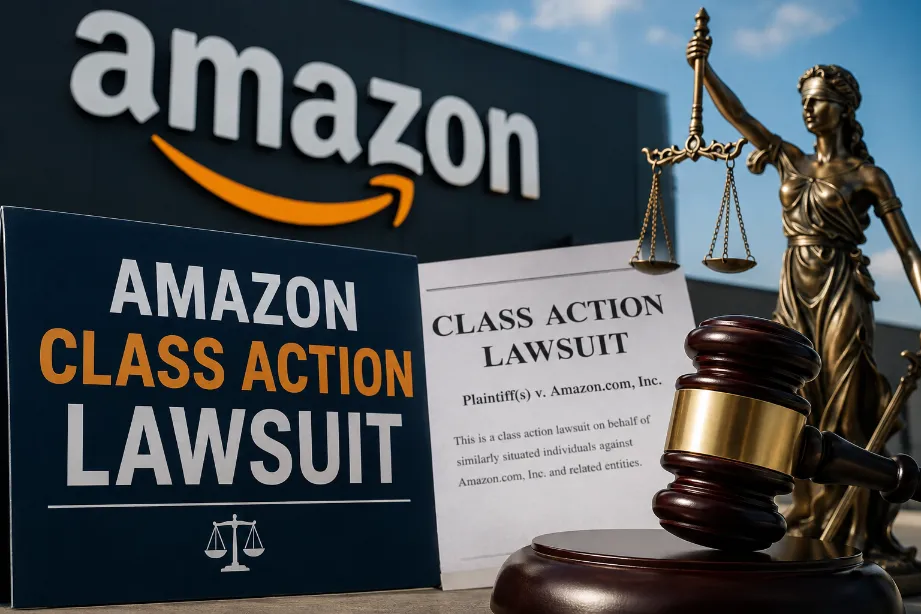
The Solitary Plaintiff: Inside Amazon’s Quiet Erasure of the Collective Suit
Every day, millions of hands perform a silent, thoughtless ritual: the indifferent scroll through endless screens of legal jargon, followed by the perfunctory tap of "I Agree." In its latest, quietest update to its Terms of Service, Amazon has weaponized this collective apathy, dismantling one of the few remaining instruments of consumer leverage. The e-commerce titan has barred its customers from initiating or participating in class-action lawsuits. Henceforth, any dispute—be it an exploding smart-speaker or a systemic, pennies-on-the-dollar billing discrepancy—must be funneled through the sterile, privatized corridors of individual third-party arbitration. Where once an aggrieved collective could pool their resources to challenge the monolith, they must now stand entirely alone.
The Architecture of Isolation
This shift is not merely a bureaucratic adjustment; it is a tactical retreat from a battlefield of Amazon’s own making. For years, Silicon Valley championed mandatory arbitration as a shield against the public theater of the courtroom, believing it would quietly smother consumer dissent in confidential, out-of-court settlements. Yet, in a twist of legal irony, creative plaintiffs' attorneys recently turned this shield into a cudgel, organizing "mass arbitrations" that flooded corporations with millions of dollars in mandatory administrative filing fees. By reverting to a system that explicitly bans class-style arbitration and forces isolated, individual actions, Amazon is seeking to atomize its user base.
> "In the kingdom of the algorithmic marketplace, you do not exist as a class; you exist only as an isolated node, easily managed and entirely decoupled from your peers."
The Price of Frictionless Living
There is a deeper, more unsettling cultural pathology at play. By forcing disputes into the shadows of private arbitration, the public record is bypassed, and with it, the oxygen of democratic accountability. When a corporation can rewrite the rules of civic recourse overnight with a silent update to its digital contract, the consumer-merchant relationship begins to resemble a modern digital fiefdom. We willingly exchange our constitutional right to a day in court for the frictionless ecstasy of same-day delivery. In this grand, convenient bargain, the true cost of our loyalty is not measured in the price of a Prime subscription, but in the slow, imperceptible surrender of our collective power.