The Ghost of Flamingo Road: Inside the Belated Trial for the Murder of Tupac Shakur
Las Vegas, a city built on the ephemeral illusion of the eternal present, is finally being forced to look backward. Nearly three decades after the fatal bullets tore through a black BMW sedan at the intersection of Flamingo Road and Koval Lane, the ghost of Tupac Shakur has entered a Nevada courtroom. The trial of Duane "Keefe D" Davis, which commenced this week with opening arguments broadcast to a global audience, represents more than a belated legal proceeding; it is a collision between the gritty, analog reality of 1990s gangland rivalry and the sterile, high-definition scrutiny of modern American justice. For twenty-eight years, Shakur’s murder existed not as a solvable crime, but as a secular religion—an unfinished tragedy populated by conspiracy theories, institutional suspicion, and the sainthood of a fallen cultural icon. Now, the state of Nevada seeks to reduce that sprawling, mythic narrative to the cold, dry calculus of a criminal verdict.
```
"The courtroom becomes a theater of memory, dissecting a tragedy that occurred when cellphones were bricks and feuds were settled in the quiet dark of desert highways."
```
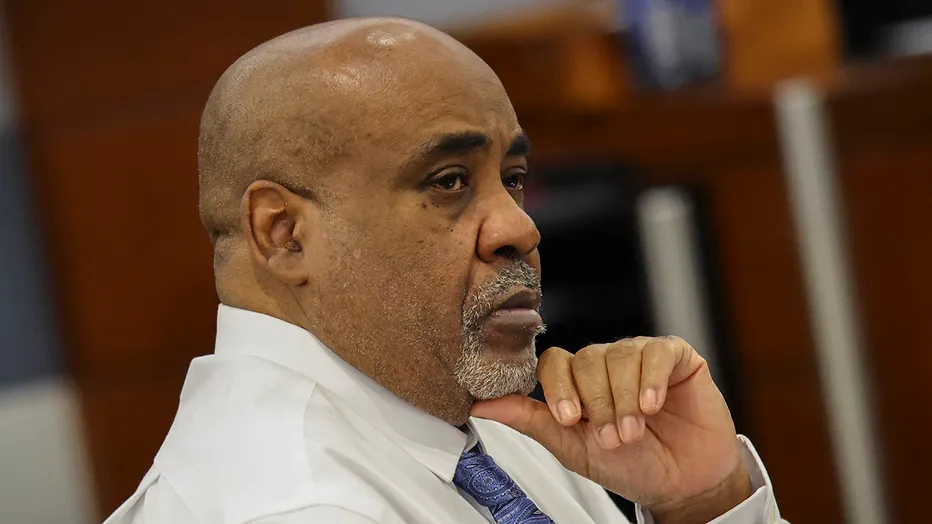
At the center of this sudden judicial focus sits Davis, a sixty-one-year-old former Compton Crip whose presence in the courtroom feels less like a criminal mastermind brought to heel and more like a specter of hip-hop’s most turbulent epoch. Davis’s arrest in late 2023 disrupted a decades-long silence, yet the profound irony of his prosecution lies in its source: Davis himself. For years, he walked a perilous line, treating his proximity to the legendary assassination as a literary asset, detailing his involvement in various media interviews and a self-published memoir. In doing so, he became the ultimate architect of his own undoing, mistaking the passage of time for immunity and transforming a hushed street secret into a public confession. In the eyes of the prosecution, Davis is the intellectual author—the last surviving conspirator of the four-man crew in the Cadillac that pulled alongside Shakur; in the eyes of history, he is a relic of an era that burned too hot and too fast.
The trial, streamed live to millions of screens, functions as a strange sort of cultural seance. It is a digital spectacle designed for an era of instant commentary, yet it dissects a tragedy born in an entirely different world. As prosecutors lay out their timeline—weaving together old police reports, archival footage of a Mike Tyson fight at the MGM Grand, and Davis’s own recorded boasts—the proceedings challenge the defense to untangle their client's self-aggrandizing public statements from actual material evidence. The defense must argue, in essence, that in the economy of hip-hop folklore, a man might confess to a historic murder he did not commit simply to remain relevant in a world that had otherwise forgotten him.
Ultimately, whatever verdict the jury delivers will do little to alter the cultural trajectory of Tupac Shakur, whose legacy is already safely cemented in the pantheon of global art, immune to the sterile findings of a Clark County jury. Yet, this trial serves as a sobering, melancholy postscript to the rap wars of the 1990s—a period that claimed its geniuses with a casual, devastating brutality. As the live stream flickers and the legal arguments grind on, the state of Nevada is not merely attempting to solve a historic homicide; it is attempting to close the book on an American tragedy, proving that while the wheels of justice are glacial, the past is never truly buried.