The Unapologetic Anthem of Autonomy
On a Friday in late July 2026, as summer heat pressed down on city streets and prediction markets buzzed with their own kind of intensity, Cardi B dropped “AH HA”—her first single of the year, and a track that immediately became a cultural flashpoint. The song is not merely a boast-laden banger; it is a declaration of independence, a rejection of the old scripts that tell women, especially Black women, that motherhood should bind them to dysfunction, that fame should temper their tongues, and that authenticity is negotiable. Within hours of its preview, one lyric—“A n***a can’t trap me, I won’t keep it”—set social media ablaze, prompting Cardi to take to Instagram Live and deliver a clarion explanation that was equal parts defiant and didactic. What emerged was not just a song, but a statement: a refusal to be trapped by anything, not even a child, if the relationship itself is untenable.
The Lyric That Broke the Internet
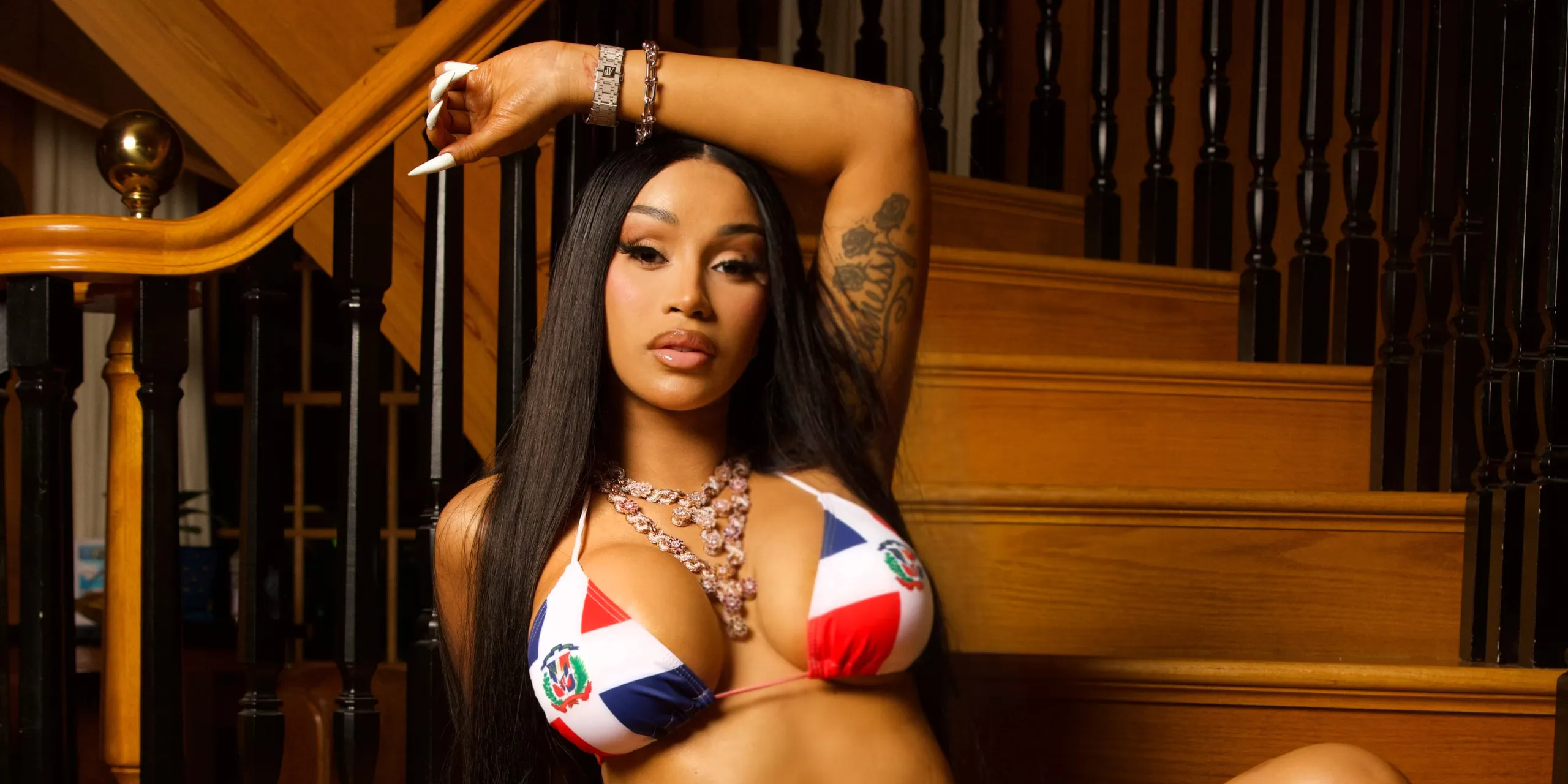
The controversy began innocuously enough. Cardi posted a snippet of herself on a beach, draped in a Dominican flag bikini, rapping with the casual confidence that has become her trademark. The lines were sharp, the delivery effortless: “Bitches be swearing they so fucking bad, I don’t see it / A n***a can’t trap me, I won’t keep it / Bitches really hate me, so be it / Bathroom floors and these hoes both heated.” It was the second line that stopped the scroll. Some listeners, perhaps conditioned by years of respectability politics, heard a dismissal of maternal responsibility. Others, more attuned to Cardi’s history of unfiltered honesty, sensed something deeper—a rejection of the idea that a woman’s autonomy evaporates the moment she becomes a mother.
Cardi, never one to let misinterpretation fester, addressed the line directly. “I know exactly what I said on that line,” she told her audience, her tone oscillating between exasperation and amusement. “Stop saying [things] like, ‘Oh, somebody wrote that for you.’ ’Cause bitch, no. I know exactly what I said. I know exactly how I felt when I said that shit.” She went on to explain that the lyric was aimed at a specific, pernicious belief: that having a child with a man means a woman is obligated to endure mistreatment, to “stay there taking shit,” as she put it. “A baby ain’t trapping me, bitch. Bye. That’s what I meant on that line.” The message was clear: motherhood does not nullify agency. A woman can love her child and still choose to leave a toxic situation—in fact, sometimes leaving is the most maternal act of all.
A Legacy of Unfiltered Truth-Telling
To understand “AH HA” is to understand Cardi B’s entire career arc. Born Belcalis Marlenis Almánzar in the Bronx, she rose from stripping to Instagram virality to becoming the first solo female rapper to top the Billboard Hot 100 in nearly two decades with “Bodak Yellow.” Her appeal has always been rooted in her refusal to code-switch, to soften her edges for palatability. She speaks in the vernacular of her upbringing, unapologetically, and that authenticity has resonated with millions who see themselves in her narrative. “AH HA” is no exception. It is a continuation of the ethos that has defined her discography: a celebration of self-determination, a rejection of respectability, and a willingness to court controversy in the service of truth.
Consider “WAP,” her 2020 collaboration with Megan Thee Stallion, which sparked nationwide debates about sexuality, feminism, and the boundaries of acceptable discourse. Or “Up,” a 2021 hit that turned a phrase from her husband Offset into a viral hook, while also delivering a masterclass in sexual agency and financial independence. Cardi’s music has always been a mirror held up to culture, reflecting back the hypocrisies and double standards that women, particularly women of color, are expected to navigate. “AH HA” fits squarely within this tradition. It is a song that dares to say what many think but few would articulate: that no relationship, no matter how entangled, is worth the sacrifice of one’s dignity or safety.
The Cultural Reckoning
The backlash to “AH HA” was swift and predictable. Critics, both professional and amateur, seized on the “trap me” lyric as evidence of moral decay, of a culture that privileges individualism over familial obligation. But this reaction reveals more about the critics than it does about Cardi. It exposes a discomfort with the idea that women, especially Black women, might prioritize their own well-being over the preservation of a relationship, even one that has produced children. It reflects a societal tendency to judge women harshly for choices that would be lauded, or at least excused, in men.
Cardi’s response was characteristically unfiltered. “I feel like y’all got something against bad bitches or that y’all been trying to play me lately and I don’t like that shit,” she said during her Instagram Live session. She then delivered a line that was both cutting and comedic: “When I used to walk around in the hall, there was a lot there was a lot of n****s and bitches in Special Ed. It was a long class for y’all motherfuckers.” The joke landed, but the point was serious: she was tired of being misunderstood, of having her words twisted to fit narratives she never intended. “I’m tired of y’all acting slow,” she concluded. “I’m tired of acting stupid. Y’all been coming at me for two days and I’m about to come at y’all.”
The Artistic Anatomy of “AH HA”
Musically, “AH HA” is a club-ready anthem, built on a foundation of hard-hitting beats and a chorus designed to be chanted. The production is sleek, the rhythm infectious, and Cardi’s delivery is as commanding as ever. She moves between braggadocio and vulnerability with ease, a skill that has become her signature. Lines like “Black trucks at the club look like Trump in this bitch, f**k him” inject a dose of political commentary, a reminder that Cardi’s worldview is not confined to personal relationships but extends to the broader cultural landscape. The song is a celebration of autonomy, a rejection of external control, and a testament to the power of self-definition.
The title itself—“AH HA”—is a nod to the moment of realization, the sudden clarity that comes when one sees through the fog of manipulation or self-deception. It is the sound of understanding, of epiphany, of a woman recognizing her own worth and refusing to settle for less. In this sense, the song is not just about leaving a bad relationship; it is about the broader project of self-liberation, of refusing to be defined by others’ expectations.
The Broader Implications
The conversation around “AH HA” touches on larger themes of autonomy, motherhood, and the societal pressures placed on women. It challenges the notion that a woman’s primary role is to maintain the family unit, regardless of the cost to her own well-being. It asserts that a woman’s value is not contingent on her relationship status, and that her choices, even those that involve children, are hers to make. This is a radical idea in a culture that still, in many ways, expects women to prioritize others’ needs over their own.
Cardi’s stance is particularly significant given her own status as a mother. She has spoken openly about her children, her relationship with Offset, and the complexities of balancing fame with family. To hear her assert that a baby will not “trap” her is not a dismissal of motherhood, but a reaffirmation of her agency within it. It is a declaration that she will not be held hostage by societal expectations, that she will not stay in a situation that is harmful to her or her children. This is a message that resonates with countless women who have faced similar dilemmas, who have been told that leaving is selfish, that staying is noble, when the reality is often far more nuanced.
The Vanity Fair Lens
If Vanity Fair were to profile “AH HA,” it would likely frame the song as a cultural artifact, a moment in time that reflects the tensions and transformations of the mid-2020s. The magazine has long been known for its in-depth, stylishly written profiles of celebrities and cultural phenomena, and “AH HA” fits squarely within its purview. The song is not just a piece of music; it is a statement, a provocation, a reflection of the broader struggles for autonomy and self-definition that define contemporary life.
In the pages of Vanity Fair, “AH HA” would be situated within a larger narrative about the evolution of female rap, the shifting boundaries of respectability, and the ongoing fight for women’s rights to control their own bodies and destinies. It would be analyzed not just for its lyrics, but for its context, its impact, its place in the continuum of cultural production. The song would be seen as a testament to Cardi’s enduring relevance, her ability to spark conversation, to challenge norms, to remain at the forefront of the cultural conversation even as the landscape around her shifts and changes.
The Final Word
“AH HA” is more than a song; it is a manifesto, a declaration of independence, a refusal to be silenced or shamed. It is a reminder that women, particularly women of color, have the right to define their own lives, to make their own choices, to prioritize their own well-being without apology. It is a song that dares to say what many think but few would articulate, and in doing so, it has become a cultural touchstone, a moment of clarity in a world that often demands compromise.
As Cardi B continues to evolve as an artist, as a mother, as a public figure, “AH HA” will stand as a testament to her unyielding commitment to authenticity, to her refusal to be anything other than herself. It is a song that will be remembered, discussed, debated, and, most importantly, felt. It is a song that says, loud and clear: I am not trapped. I am free. And I will not be anything less.