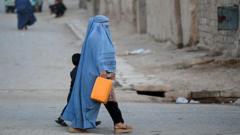
The Silent Archipelago: Inside the Systematic Erasure of Afghanistan’s Women
The blue of the burqa, once a personal choice or a traditional vestige, has hardened into a mandatory shroud that renders Kabul’s streetscapes uniform, quiet, and increasingly empty. Half a decade into the Taliban’s grim restoration, the kinetic, hopeful energy that once defined the city’s universities, media rooms, and cafes has been systematically drained, replaced by a heavy quietude that feels less like peace and more like a collective breath held in perpetuity. To navigate Afghanistan as a woman today is to traverse a shifting cartography of prohibition. What began in 2021 as an anxious retreat from the public square has solidified into a legally codified exile. The transformation is not merely political; it is existential. The modern Afghan woman has been retrofitted into a ghost, expected to move through her own country without leaving a footprint or raising her voice.
The instruments of this containment are both physical and bureaucratic, designed to dismantle autonomy under the guise of moral hygiene. According to accounts smuggled out of the country, the daily existence of women is now arbitrated by the whip, the checkpoint, and the decree. Public floggings have returned to the dirt centers of sports stadiums, serving as theatrical warnings against transgressions of dress and movement. Under the watchful eye of the Ministry for the Propagation of Virtue and the Prevention of Vice, the professional classes have been utterly dismantled; female doctors, judges, teachers, and civil servants have seen their credentials reduced to useless paper, their livelihoods vanishing overnight. This institutionalized isolation is perhaps most lethal in its quietest arenas. With female medical personnel largely barred from training and women forbidden from traveling without a male guardian (mahram), basic healthcare has become a gauntlet. Preventable maternal mortality is quietly climbing, transforming the simple act of seeking a doctor into a high-stakes gamble with survival.
> "We are living in a museum of our former selves, looking at the clothes we used to wear and the books we used to read, wondering if that person was ever real."
Yet, behind the high mud-brick walls of domestic compounds, a fragile, desperate architecture of resistance persists. In living rooms converted into clandestine classrooms and whispered conversations over encrypted phone lines, women describe the psychological claustrophobia of their new reality. The home, once a sanctuary, has transformed into a site of enforced confinement where mothers must explain to their daughters why they can no longer feel the sun on their faces without a male escort. "We are living in a museum of our former selves," one former Kabul university student notes, her voice carrying the heavy cadence of survival. To speak of these conditions is to court ruin, yet they continue to speak, documenting a collective grief that is as deep as it is invisible to the outside world.
The tragedy of contemporary Afghanistan lies in the international community’s creeping fatigue—a slow, bureaucratic shrugging of shoulders as the unacceptable is gradually normalized into the geopolitical status quo. What the Taliban has constructed is not merely a repressive regime, but a total ecosystem of gendered containment, proving that social progress is never a one-way street, but a fragile clearing that can be swiftly reclaimed by the jungle. As the years stretch onward, the silent tragedy of Afghanistan remains a stark warning of how quickly a society's horizon can contract, leaving half its population to watch their lives fade into memory, waiting for a dawn that feels increasingly mythological.