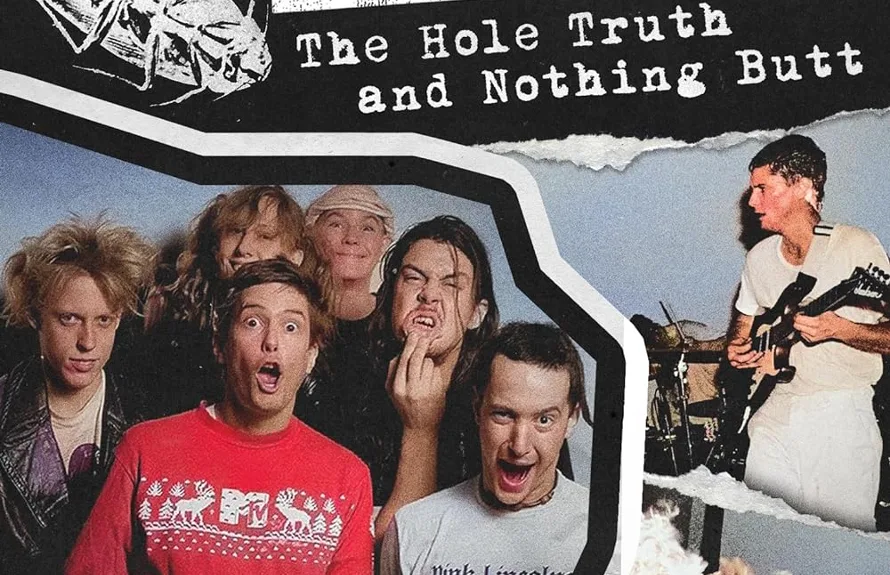
The Beautiful, Grotesque Vindication of the Butthole Surfers
To understand the Butthole Surfers is to recall an era when American rock music was not a curated lifestyle brand, but a genuine, sweat-soaked, hallucinogenic health hazard. Emerging from the scorched-earth landscape of San Antonio, Texas, in the early 1980s, the band did not merely perform; they staged psychotropic exorcisms, terrorizing audiences with strobe lights, disturbing medical films, burning cymbals, and a sonic cacophony that sat at the unstable intersection of punk, avant-garde noise, and acid-drenched delirium. Decades after they first shattered the eardrums of the underground, a new documentary seeks to map the brilliant, chaotic wreckage of their career—offering a definitive cultural excavation of a band that dared the mainstream to look away, only to watch the mainstream eventually blink.
At the heart of this new cinematic retrospective is a poignant tension between the band’s mythic lawlessness and the inescapable gravity of aging. While the film captures the visceral thrill of their legendary, often terrifying live shows, it refuses to succumb to easy, nostalgic hagiography. Instead, the narrative digs beneath the greasepaint and the feedback to reveal a sobering human cost: a trail of broken friendships, financial precarity, mental fraying, and the profound weight of survival. It is an autopsy of an era when self-destruction was romanticized as artistic duty, rendering the film a deeply moving study in the layers of loss and regret that inevitably accumulate when the carnival finally packs up and leaves town.
```
"It’s kind of vindicating."
— Gibby Haynes
```
There is, of course, a supreme irony in a band of such uncompromising, grotesque defiance receiving the prestigious, archival documentary treatment. This was a collective that took perverse delight in alienating gatekeepers, yet somehow stumbled into a major-label deal and scored a modern-rock radio hit in the mid-1990s with the hypnotic, loop-driven "Pepper." Reflecting on this strange arc of survival and sudden historical prestige, frontman Gibby Haynes—the towering, mercurial shaman of the group’s golden age—offered a characteristically dry appraisal of their newfound canonization: “It’s kind of vindicating.” It is the quiet admission of an outlaw who has lived long enough to see his rap sheet mistaken for a resume of genius.
Ultimately, the film functions as both an elegy and a monument. In an era where cultural rebellion has been thoroughly sanitized, algorithmic, and optimized for polite consumption, the Butthole Surfers remain a monument to the untamed, dangerous potential of art. This documentary does not merely celebrate their past; it reminds us of what we lost when rock and roll traded its madness for respectability. It is a bittersweet, essential tribute to a band that set fire to the stage, looked into the ashes, and found something resembling a masterpiece.