Pushing aerodynamic boundaries: NASA Armstrong advances wing design with CATNLF flight testing
EDWARDS, Calif. — NASA’s Armstrong Flight Research Center has marked another milestone in its near-eight-decade legacy of aviation pioneering with a series of flight tests for the Crossflow Attenuated Natural Laminar Flow (CATNLF) initiative. Conducted earlier this year, these test flights evaluated a novel wing concept designed to maximize smooth, laminar airflow over flight surfaces. By delaying the transition from smooth laminar flow to turbulent air, the CATNLF project seeks to significantly reduce aerodynamic drag, a breakthrough that could reshape the efficiency of modern aircraft.
The physics of flight dictate that turbulent airflow over a wing increases aerodynamic drag, forcing aircraft engines to burn more fuel to maintain speed. The CATNLF initiative specifically addresses "crossflow" instability—a primary cause of turbulence on the swept-wing designs common to modern passenger jets.
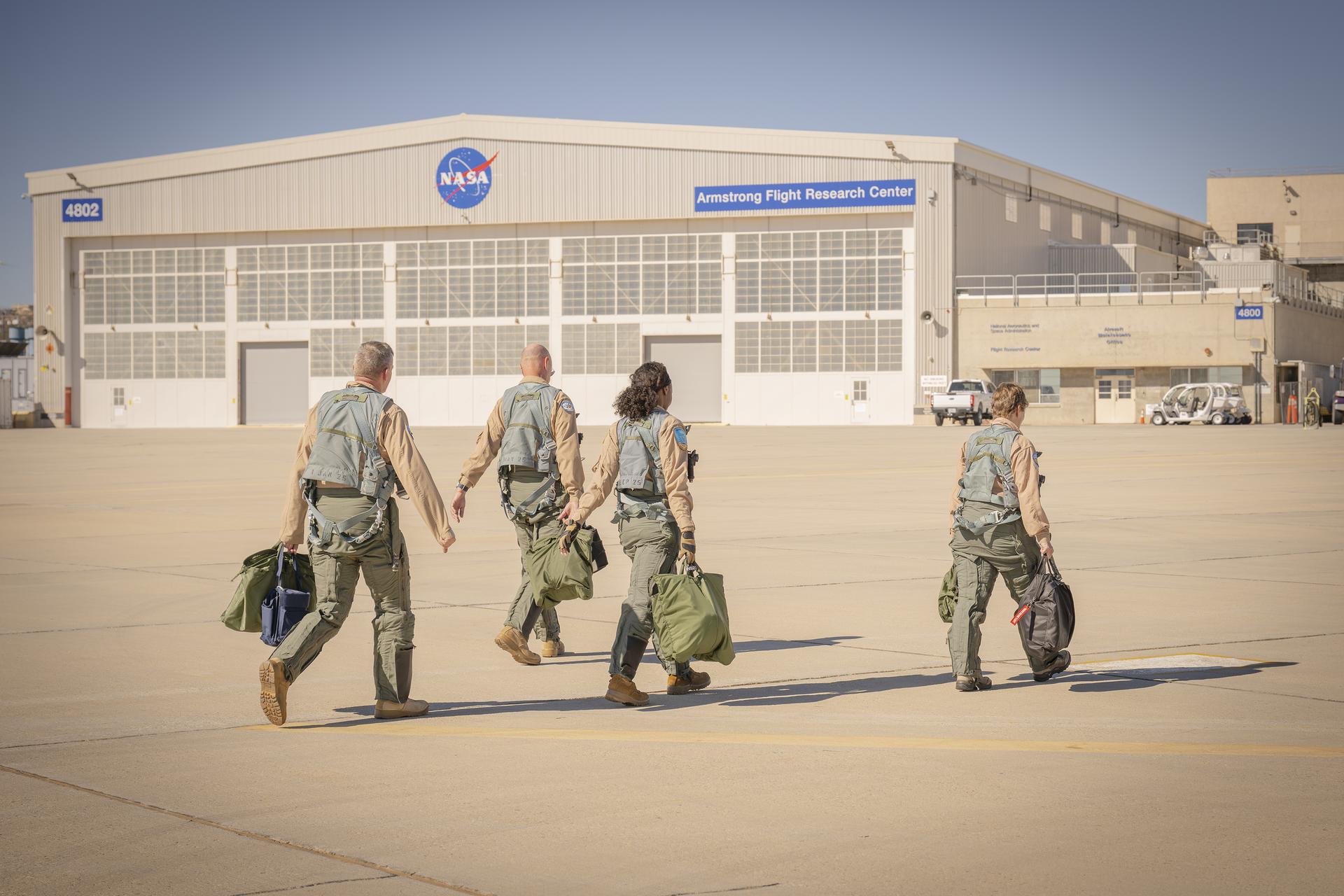
"Flight testing is inherently a team sport, requiring seamless coordination between pilots, research engineers, and ground crews," said Dr. Evelyn Vance, a lead aerodynamics researcher associated with the project. "With CATNLF, we are testing highly precise wing contours. The real-world data collected from these flights is crucial to validating our computational models and proving that laminar flow can be maintained under actual flight conditions."
Key Objectives of the CATNLF Initiative:
- Drag Reduction: Minimizing turbulent airflow to lower aerodynamic resistance.
- Fuel Efficiency: Decreasing fuel consumption for long-haul commercial flights.
- Environmental Impact: Reducing greenhouse gas emissions to support global sustainability goals.
- Model Validation: Comparing flight test data with wind tunnel and supercomputer simulations.
Located on the edge of the Mojave Desert, NASA Armstrong has served as the vanguard of experimental flight research since 1946. Over its nearly 80-year history, the center has hosted historic milestones, including the breaking of the sound barrier by the Bell X-1 and the development of digital fly-by-wire technology. The CATNLF project continues this tradition of utilizing specialized, sensor-equipped aircraft to test advanced theories in the sky, providing a level of atmospheric complexity that ground-based wind tunnels cannot fully replicate.
The implications of successful laminar flow control are vast for the global aviation sector. Industry analysts note that even a modest single-digit percentage reduction in aircraft drag could translate to billions of dollars in fuel savings annually and significantly lower carbon emissions. As commercial aviation manufacturers face mounting pressure to reach net-zero carbon emissions by 2050, the experimental flight data gathered at NASA Armstrong offers a vital pathway toward the next generation of eco-friendly aircraft design.