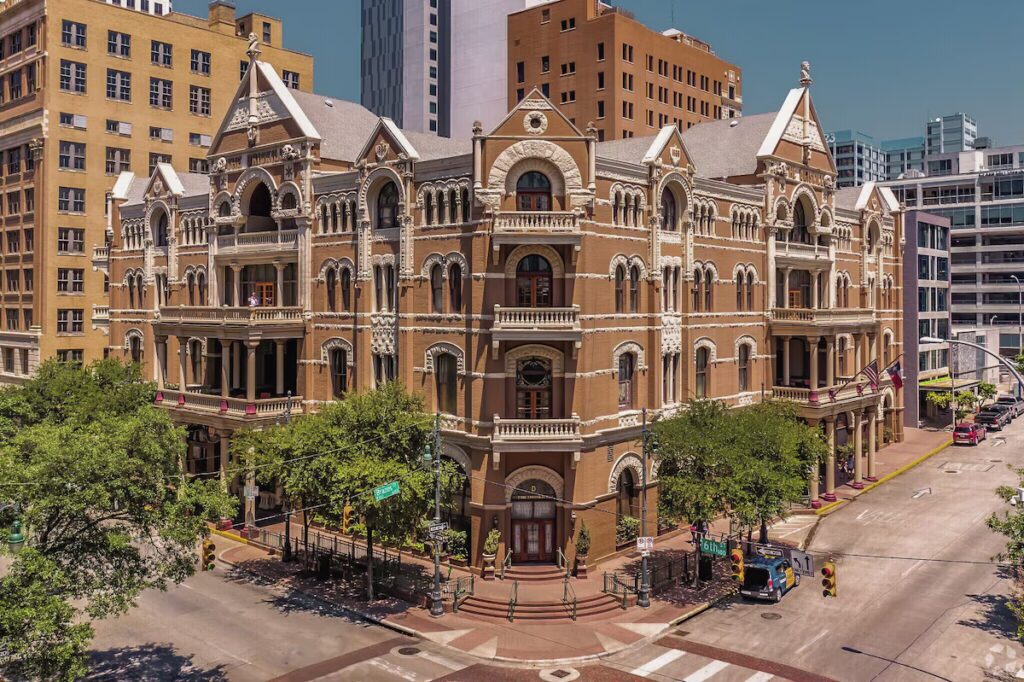
Preserving the Past: How Adaptive Reuse is Shaping the Future of Luxury Hospitality
Capitalizing on the growing consumer demand for experiential travel, real estate developers are increasingly turning to "adaptive reuse"—the practice of converting historic, disused structures into high-end accommodations. While building from the ground up offers predictability, transforming heritage properties allows hospitality brands to secure prime urban locations with built-in architectural character. This development strategy, though fraught with strict historic preservation guidelines and complex engineering hurdles, is proving highly lucrative. As modern travelers seek out localized authenticity, developers are successfully marrying vintage structural bones with state-of-the-art luxury.
Two prominent examples of this global trend include a newly opened boutique hotel in a restored 1910s maritime warehouse in Seattle’s historic Pioneer Square, and the highly anticipated transformation of a former prison in Nara, Japan. In Seattle, the property retains its massive, original Douglas fir beams and exposed brickwork, contrasting them with minimalist Italian furnishings and smart-room technology. Meanwhile, in Nara, Japan’s oldest preserved Meiji-era prison is undergoing a meticulous restoration spearheaded by luxury operator Hoshino Resorts. The red-brick facility, originally built in 1908, will repurpose its striking radial cell blocks into serene, high-end guest suites, offering visitors an architectural experience that honors the property's cultural property designation.
Beyond these flagship projects, three other notable international properties highlight the geographic diversity of this real estate niche:
- The Postal Assembly (London, UK): A grand Edwardian-era sorting office in the heart of the financial district, meticulously reborn as a sleek corporate retreat with its original bronze mail chutes and stone facade intact.
- The Malt House (Munich, Germany): A mid-19th-century brewery that has transitioned into a contemporary boutique hotel celebrating Bavarian industrialism, complete with vaulted brick ceilings and copper detailing.
- Palacio San Telmo (Buenos Aires, Argentina): A neglected late-Victorian mansion restored to its former aristocratic glory, blending historic frescoed ceilings with modern, eco-conscious geothermal heating systems.
"The economics of adaptive reuse are complex because retrofitting century-old plumbing, electrical, and HVAC systems is notoriously expensive," says Marcus Vance, a senior commercial real estate analyst at Horizon Capital. "However, the marketing advantage is immense. These properties command significantly higher average daily rates because they offer an irreplaceable sense of history and place that a newly constructed glass-and-steel tower simply cannot replicate."
Ultimately, the success of these properties underscores a broader shift in the luxury travel sector, where authenticity has overtaken standardized opulence as the primary consumer demand. By preserving the structural narratives of the past—whether those of a bustling American warehouse or a quiet Japanese penitentiary—developers are not only safeguarding local architectural history but also establishing a resilient, high-yield asset class that appeals to the next generation of global travelers.