The Luminous Liturgy of the Earth: NASA’s Hyperwall and the Art of Planetary Storytelling
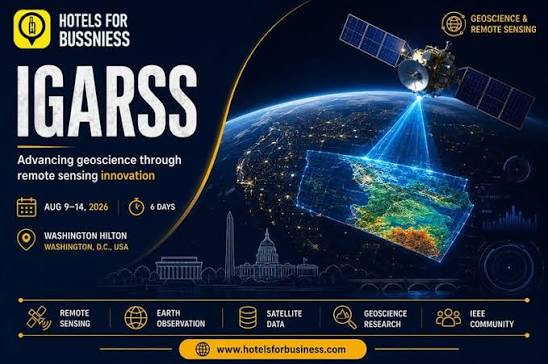
In an era defined by ecological anxiety and data saturation, there exists a distinct, almost sacred art in making the invisible visible. When the International Geoscience and Remote Sensing Symposium (IGARSS) convenes in August 2026, the vanguard of this visual diplomacy will be found at Booth #100. Here, NASA will deploy its "Hyperwall"—not merely a high-definition display array, but a secular altar of planetary surveillance. It is a space where the dizzying, mathematical abstractions of climate science are transmuted into cinematic narratives. On this glowing canvas, researchers do not merely lecture; they curate the sublime, translating the silent, colossal shifts of our warming biosphere into a visual language that is as arresting as it is intellectually urgent.
The curation begins on the afternoon of Monday, August 10, with a deliberate intellectual progression from the mechanical to the existential. At 3:00 PM, Mike Seablom takes the stage to present Technology Enabling the Future of Earth Science. Seablom, a key architect of NASA’s technological vision, will pull back the curtain on the quiet revolutions in hardware and algorithmic processing that allow us to perceive the planet in real-time. Immediately following at 3:15 PM, Dr. Karen St. Germain, Director of NASA’s Earth Science Division, will deliver Discovery Earth: New Missions & Technical Innovation Advancing Earth System Insights. St. Germain’s presentations are historically highly anticipated; she possesses a rare capability to marry bureaucratic ambition with poetic gravity, framing NASA's upcoming fleet of orbital observatories not merely as feats of engineering, but as vital sensory organs designed to diagnose a feverish world.
> "Data alone is insufficient to move the human conscience; it requires a story told in the vocabulary of light and shadow."
On Tuesday morning, August 11, the narrative lens shifts from the skyward gaze of billion-dollar satellites to the ground-level democratization of science. At 10:00 AM, the Hyperwall will spotlight STELLA: Open-Source Multisensor Platforms For Real-Time monitoring. This presentation represents a profound paradigm shift in modern ecological stewardship. By stripping away the proprietary barriers of remote sensing, the STELLA initiative champions the democratization of the technological sublime. It envisions a future where Earth observation is no longer the exclusive province of nation-states and elite institutions, but an open-source civic tool, empowering localized communities to witness, measure, and defend their immediate environments.
Ultimately, NASA’s presence at IGARSS 2026 serves as a reminder that the crisis of the modern Anthropocene is, in part, a crisis of translation. The Hyperwall functions as a bridge over this chasm, linking the clinical coldness of raw telemetry to the warmth of human comprehension. In a culture increasingly fractured by skepticism and digital fatigue, these brief, high-fidelity dispatches from the frontlines of Earth science are more than mere technical updates. They are lucid, luminous, and desperately necessary testaments to human ingenuity—proving that to save a planet, we must first learn how to see it.